Mini Split vs Central Air: Which System Is Right for Your Home?
📅 Updated August 2026 | ⏱️ 9 min read | ✅ Expert Reviewed
Choosing the right cooling and heating system for your home is a big decision. Two of the most popular options today are ductless mini split systems and traditional central air. But which one truly fits your needs, budget, and home layout? At Refria, we have helped hundreds of homeowners navigate this exact question — and in this guide, we break down everything you need to know about mini split vs central air so you can make a confident, informed choice.
💬 Not sure which system is right for you? Our HVAC experts at Refria are ready to help — free consultation.
What Is a Ductless Mini Split System?
A ductless mini split is a heating and cooling system that operates without the need for bulky ductwork. It consists of two main components: an outdoor compressor unit and one or more indoor air-handling units mounted on the wall, ceiling, or floor. These two parts are connected by a small conduit that runs through a modest opening in the wall, carrying refrigerant lines, power cables, and a condensate drain.
Mini splits are known for their zone-based comfort. Each indoor unit can be controlled independently, which means you can set different temperatures in different rooms. This level of precision is something traditional central air systems often struggle to match without expensive add-ons like motorized dampers.
💡 Refria Expert Tip: Mini splits are especially popular in homes without existing ductwork, room additions, sunrooms, and converted garages. Our installation team at Refria has completed over 600 mini split installations in the past three years alone.
What Is a Central Air System?
A central air conditioning system uses a network of ducts to distribute cooled or heated air throughout your entire home from a single central unit. The system typically includes an outdoor condenser, an indoor evaporator coil (often integrated with a furnace or air handler), and a thermostat that controls the whole house from one location.
Central air is the go-to choice for many homeowners because it delivers consistent, whole-house comfort from a single system. When properly sized and installed, it can efficiently maintain a steady temperature in every room — provided the ductwork is in good condition and well-sealed.
Key Differences: Mini Split vs Central Air
When comparing mini split vs central air, the differences go beyond just the presence or absence of ducts. Here is a side-by-side breakdown of what matters most for homeowners:
🔵 Ductless Mini Split
Ductwork: None required
Zone Control: Built-in, per room
Installation: 1–2 days, minimal disruption
Energy Loss: No duct losses (up to 30% savings)
Indoor Visibility: Wall-mounted units visible
Upfront Cost: Moderate per zone
Best For: Older homes, additions, multi-zone needs
🟠 Central Air System
Ductwork: Requires existing ducts
Zone Control: Whole-house, single thermostat
Installation: 3–7 days if ducts needed
Energy Loss: 20–30% duct losses possible
Indoor Visibility: Hidden behind vents
Upfront Cost: Higher if ducts needed
Best For: New construction, homes with ducts
🔍 Still comparing options? Let Refria help you decide.
💬 Message Us on WhatsApp NowCost Comparison: Mini Split vs Central Air
Cost is often the deciding factor for homeowners. Here is how the numbers typically break down when evaluating mini split vs central air:
Upfront Equipment and Installation
A mini split system for a single zone generally ranges from $3,000 to $7,000 installed, while a multi-zone system covering three to four rooms can run $8,000 to $15,000. A central air system typically costs $5,000 to $12,000 for the equipment and installation — but if new ductwork is needed, that can add $3,000 to $10,000 or more to the total.
Long-Term Operating Costs
Because mini splits avoid duct losses, they can be up to 30% more efficient in real-world conditions. This translates directly into lower monthly energy bills — a key reason many homeowners choose ductless systems despite a sometimes higher upfront investment per zone.
💰 Get a Personalized Cost Estimate
Every home is different. Reach out to Refria for a detailed quote tailored to your space.
📧 Request Your Free EstimateEnergy Efficiency: Which System Saves More?
Modern mini split systems often carry SEER2 ratings of 20 to 28 or higher, placing them among the most efficient residential HVAC options available. By comparison, even high-efficiency central air units typically top out around SEER2 18 to 24. The absence of ductwork means mini splits avoid the 20–30% energy losses commonly associated with leaky or uninsulated ducts.
Inverter-driven compressor technology — standard in nearly all modern mini splits — allows the system to ramp up or down smoothly rather than cycling on and off. This variable-speed operation uses significantly less electricity and maintains more stable indoor temperatures, contributing to both comfort and savings.
Mini Split vs Heat Pump: What Is the Difference?
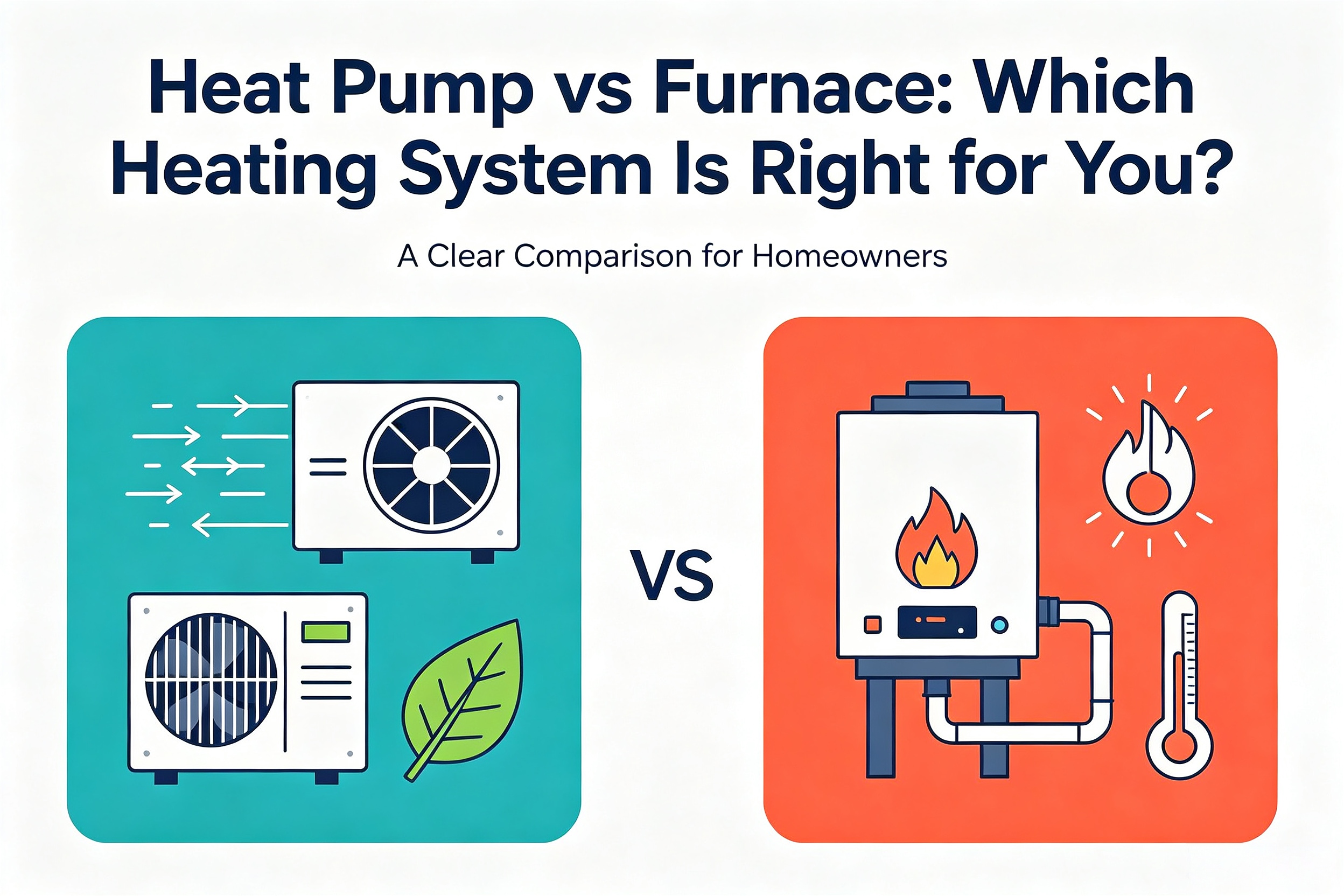
A common point of confusion is the comparison of mini split vs heat pump. The truth is that most ductless mini splits are heat pumps — they provide both cooling and heating by reversing the refrigeration cycle. When people refer to a "heat pump," they are often talking about a central ducted heat pump that works with existing ductwork.
🔑 Key takeaway: A ductless mini split is essentially a highly efficient heat pump that delivers air directly into each room without ducts. A central heat pump uses ducts to move air through the entire house. Both are heat pumps — the main difference lies in how air is distributed, not in the core technology. So when you research mini split vs heat pump, understand that you are really choosing between ducted vs ductless delivery of heat pump technology.
At Refria, we often recommend ductless mini split heat pumps for homes that currently rely on baseboard heating, electric furnaces, or window AC units. The switch can deliver substantial energy savings while providing both heating and cooling from a single system.
Installation: What to Expect
Mini Split Installation
Installing a ductless mini split is typically a one-day to two-day job per zone. The process involves mounting the indoor unit on the wall, placing the outdoor unit on a pad or bracket, and drilling a small 2–3 inch hole through the wall for the line set. There is minimal disruption to your home, and no major construction is required. This makes mini splits ideal for retrofit applications.
Central Air Installation
If your home already has ductwork in good condition, installing a central air system is straightforward — usually a two-day to four-day project. However, if ducts need to be installed, repaired, or replaced, the timeline can extend to one to two weeks, and costs rise considerably. The work may involve opening walls, ceilings, or floors to run ductwork.
📧 Questions About Installation?
Email Refria Now💬 Prefer a Quick Chat?
Message on WhatsAppWhich System Is Best for Your Home?
The answer depends on several factors unique to your situation. Here is a quick guide based on common scenarios our Refria team encounters:
✅ Choose a Mini Split If:
• Your home lacks ductwork
• You want room-by-room temperature control
• You are adding a room addition or converting a garage
• Energy efficiency is a top priority
• You want both heating and cooling from one unit
✅ Choose Central Air If:
• Your home has existing ductwork in good condition
• You prefer invisible, vent-based air delivery
• You want a single system for the whole house
• You are building a new home with ducts planned
• You are replacing an older central system
Frequently Asked Questions
Can a mini split cool an entire house?
Yes. A multi-zone mini split system can cool and heat an entire home. You will need one indoor unit per room or zone, connected to one or more outdoor compressors. This setup provides excellent zone control but may have a higher upfront cost compared to a single central air unit serving the same square footage.
Is a mini split a heat pump or an air conditioner?
Most ductless mini splits are heat pumps, meaning they provide both cooling and heating. Some budget models are cooling-only, but the vast majority of residential installations today use heat pump technology. This is why the mini split vs heat pump discussion often causes confusion — they are largely the same technology, just packaged differently.
How long do mini split systems last?
With proper maintenance, a quality mini split system can last 15 to 20 years or more. This is comparable to or slightly longer than the average central air system lifespan of 12 to 18 years. Regular cleaning of filters and annual professional checkups make a significant difference.
Do mini splits work in very cold climates?
Modern cold-climate mini split heat pumps can operate efficiently at temperatures as low as -13°F to -22°F (-25°C to -30°C), depending on the model. This makes them a viable heating option even in northern regions, reducing or eliminating the need for a separate furnace.
🏠 Ready to Upgrade Your Home Comfort?
The Refria team is standing by to help you choose the perfect system — mini split, central air, or a hybrid solution.
Final Thoughts
Both mini split and central air systems have their strengths, and the right choice depends entirely on your home's layout, your budget, and your comfort preferences. The mini split vs central air decision does not have to be overwhelming — with expert guidance, you can find a solution that delivers lasting comfort and energy savings.
At Refria, we take pride in offering honest, personalized advice. Whether you are leaning toward a ductless mini split, a high-efficiency central air system, or want to explore the mini split vs heat pump options further, our experienced team is here to help — from the first consultation all the way through professional installation and beyond.
Release time: 2026-08-04
What Is a Smart Thermostat? Everything You Need to Know
Types of Air Conditioners: Find the Best Type of AC for Your Home
Related blog