How Does an Air Handling Unit Work? A Complete AHU Guide
HVAC Knowledge Center
Discover How an Air Handling Unit Delivers Clean, Comfortable and Energy-Efficient Indoor Air
Whether installed in commercial buildings, manufacturing facilities, hospitals or shopping centers, an Air Handling Unit (AHU) is responsible for preparing and delivering conditioned air throughout an HVAC system. Understanding how an AHU works helps facility owners, contractors and engineers select the right solution for long-term performance, indoor air quality and energy efficiency.
Introduction
Modern commercial HVAC systems are expected to do much more than simply cool or heat a building. They must continuously deliver fresh outdoor air, remove airborne contaminants, regulate humidity and maintain stable indoor temperatures while operating as efficiently as possible. At the center of these functions is the Air Handling Unit.
An AHU works as the "air processing center" of an HVAC system. Instead of generating cooling or heating itself, it conditions air by combining filtration, ventilation, heat exchange and controlled airflow into one integrated system. The conditioned air is then distributed through ductwork to every occupied area.
Although Air Handling Units are widely used across commercial buildings, many people are unfamiliar with the sequence of processes occurring inside the cabinet. Knowing how each section operates not only improves system selection but also helps reduce operating costs and simplify maintenance planning.
In this guide, we explain how an Air Handling Unit works, introduce its major components, discuss different AHU configurations and share practical recommendations for improving HVAC efficiency in commercial and industrial applications.
Why Understanding AHU Operation Matters
Better Equipment Selection
Understanding airflow requirements helps engineers and contractors choose the right AHU capacity, airflow configuration and filtration level for different buildings.
Lower Operating Costs
A properly designed Air Handling Unit improves airflow efficiency, reduces fan energy consumption and minimizes unnecessary heating or cooling loads.
Healthier Indoor Environment
Efficient filtration and humidity management contribute to cleaner indoor air and a more comfortable environment for occupants.
What Is an Air Handling Unit?
An Air Handling Unit (AHU) is a centralized HVAC component designed to condition and circulate air throughout a building. It typically contains several integrated sections, including air filters, fans, heating coils, cooling coils, dampers and optional heat recovery devices. Together, these components prepare indoor or outdoor air before it enters occupied spaces.
Unlike air conditioners that focus primarily on temperature control, an AHU manages multiple environmental factors simultaneously. It filters airborne particles, regulates humidity, controls airflow volume and maintains consistent air distribution, making it an essential solution for commercial and industrial HVAC systems.
Air Handling Units can be customized according to project requirements. Depending on the application, an AHU may supply 100% fresh outdoor air, recirculate indoor air or combine both through intelligent airflow control strategies.
Air Filtration
Removes dust, pollen, bacteria and airborne contaminants before conditioned air enters occupied spaces.
Temperature Control
Heating and cooling coils adjust supply air temperature to maintain comfortable indoor conditions throughout the year.
Air Distribution
High-efficiency fans deliver conditioned air evenly through the duct system, ensuring balanced airflow across multiple zones.
Why Air Handling Units Matter in Modern HVAC Systems
In commercial and industrial buildings, maintaining stable indoor conditions requires more than simply producing cold or warm air. Air must be continuously cleaned, conditioned and distributed to different areas while adapting to changes in occupancy, weather and operational demands. This is why the Air Handling Unit serves as one of the most important components in an HVAC system.
A well-designed AHU improves indoor air quality, supports energy-efficient building operation and creates a comfortable environment for employees, customers and visitors. When paired with intelligent controls, modern Air Handling Units can also reduce energy consumption by optimizing airflow, regulating fresh air intake and recovering thermal energy from exhaust air.
Industries such as healthcare, pharmaceuticals, electronics manufacturing, food processing and commercial real estate often rely on customized AHUs because each application has unique airflow, filtration and temperature requirements.
Cleaner Air
Multi-stage filtration helps remove airborne particles, improving indoor air quality and protecting occupants.
Better Comfort
Consistent airflow and balanced temperature distribution create a more comfortable indoor environment.
Energy Savings
Efficient fans, EC motors and heat recovery technologies reduce operating costs throughout the building lifecycle.
Flexible Design
Modular configurations allow AHUs to meet the specific requirements of offices, factories, hospitals and data centers.
How an Air Handling Unit Works
Although Air Handling Units are available in many configurations, their operating principle remains largely the same. Air passes through several functional sections, with each component performing a specific task before conditioned air is supplied to occupied spaces.
Typical Airflow Process
01
Air Intake
02
Filtration
03
Heating / Cooling
04
Humidity Control
05
Supply Fan
06
Air Distribution
Air Intake
Every air conditioning cycle begins with air intake. Depending on the system design, the AHU may draw in outdoor fresh air, recirculated indoor air or a carefully controlled mixture of both. Motorized dampers regulate the proportion of fresh and return air to maintain indoor comfort while satisfying ventilation requirements.
Introducing fresh outdoor air is essential for reducing carbon dioxide concentration, removing indoor pollutants and supporting healthier indoor environments, especially in buildings with high occupant density.
Air Filtration
Before the air reaches the heating or cooling section, it passes through one or more filters that capture dust, pollen and other airborne particles. Depending on the application, AHUs may use coarse filters, fine filters or high-efficiency filtration systems to achieve the desired level of indoor air cleanliness.
Effective filtration protects both building occupants and internal HVAC components. Cleaner coils and fans maintain higher operating efficiency and reduce maintenance frequency over time.
Professional Insight
Facilities such as hospitals, pharmaceutical plants and laboratories often require multi-stage filtration with higher efficiency ratings to control airborne contaminants and maintain strict environmental standards.
Heating and Cooling Coil
After filtration, the conditioned air passes across heating coils or cooling coils. Chilled water, hot water or refrigerant flowing through these coils transfers heat between the air stream and the HVAC system, allowing the supply air temperature to reach the desired setpoint.
During summer operation, cooling coils remove heat from the incoming air while simultaneously reducing moisture through condensation. During colder seasons, heating coils raise the air temperature before distribution throughout the building.
Accurate temperature control is one of the key reasons why Air Handling Units are widely used in office buildings, industrial facilities, educational institutions and healthcare environments.
Humidity Control
Temperature alone does not determine indoor comfort. Relative humidity has a significant impact on occupant well-being, equipment performance and building preservation. A modern Air Handling Unit helps maintain balanced humidity levels by removing excess moisture during cooling or incorporating humidification modules where dry air is a concern.
Proper humidity management reduces the risk of condensation, mold growth and static electricity while creating a healthier indoor environment. This function is especially important in hospitals, laboratories, cleanrooms, museums and electronics manufacturing facilities where environmental stability is critical.
Why Humidity Matters
Comfort
Balanced humidity improves thermal comfort and reduces the feeling of excessive dryness or dampness.
Building Protection
Controlled moisture levels help protect furniture, electronics and construction materials.
Air Quality
Maintaining proper humidity discourages mold growth and supports healthier indoor environments.
Fan Section
Once the air has been filtered and conditioned, the fan section generates the airflow required to distribute it throughout the duct network. Modern Air Handling Units commonly utilize backward-curved centrifugal fans, plug fans or EC fans that deliver stable airflow while minimizing energy consumption and operating noise.
Variable-speed fan technology allows the AHU to respond dynamically to changing building loads. Instead of operating continuously at full capacity, fan speed adjusts according to occupancy and ventilation demand, improving both efficiency and comfort.
Air Distribution
The final stage of the process involves delivering conditioned air through the building's ductwork. Properly designed duct systems distribute air evenly to different zones, ensuring that each occupied space receives adequate ventilation and consistent temperature control.
Depending on the building design, return air is collected and sent back to the Air Handling Unit, where the conditioning cycle begins again. This continuous circulation helps maintain stable indoor environmental conditions throughout daily operation.
Main Components Inside an Air Handling Unit
Although AHUs are available in numerous configurations, most systems consist of several essential modules working together to process and deliver conditioned air efficiently.
Different Types of Air Handling Units
Air Handling Units are available in multiple configurations to suit different buildings, installation environments and ventilation requirements. Selecting the appropriate type depends on factors such as available installation space, airflow capacity, indoor air quality standards and energy performance objectives.
Modular Air Handling Unit
Modular AHUs consist of multiple configurable sections that can be assembled according to project requirements. This flexibility makes them ideal for large commercial buildings, hospitals, industrial plants and data centers.
Best for large customized HVAC projects
Packaged Air Handling Unit
Packaged AHUs integrate essential components into a compact enclosure, simplifying installation while reducing onsite assembly time. They are widely used in offices, hotels and retail buildings.
Best for fast installation projects
Rooftop Air Handling Unit
Designed for rooftop installation, these systems maximize indoor floor space while providing reliable ventilation and air distribution for commercial buildings with limited mechanical rooms.
Best for shopping centers and office buildings
Hygienic Air Handling Unit
Hygienic AHUs feature smooth internal surfaces, corrosion-resistant materials and enhanced sealing to minimize contamination risks in clean environments.
Best for healthcare and pharmaceutical applications
How to Improve Air Handling Unit Efficiency
Improving AHU efficiency is not limited to selecting high-quality equipment. Proper system design, routine maintenance and intelligent controls all contribute to lower operating costs and better indoor environmental performance.
Select High-Efficiency Fans
Modern EC fans and variable-speed motors automatically adjust airflow according to building demand, reducing unnecessary electricity consumption.
Upgrade Filtration Strategically
Choose filter efficiency based on indoor air quality requirements while monitoring pressure drop to avoid unnecessary fan energy consumption.
Integrate Heat Recovery
Recovering thermal energy from exhaust air significantly reduces heating and cooling loads, particularly in buildings requiring continuous fresh-air ventilation.
Optimize Airflow Management
Well-designed duct systems, balanced airflow and properly adjusted dampers minimize pressure losses and improve system performance.
Utilize Smart Building Controls
Sensors, building automation systems and demand-controlled ventilation continuously optimize AHU operation based on real-time occupancy and environmental conditions.
Common Air Handling Unit Maintenance Tips
Even the most advanced Air Handling Unit requires routine inspection and preventive maintenance to deliver reliable performance. Regular servicing not only extends equipment life but also improves indoor air quality and reduces unexpected downtime.
Replace Filters Regularly
Dirty filters increase airflow resistance, reduce system efficiency and place additional strain on fan motors. Replace filters according to operating conditions and manufacturer recommendations.
Inspect Coils
Keep heating and cooling coils clean to maintain efficient heat transfer and reduce unnecessary energy consumption.
Check Fans & Belts
Inspect fan bearings, belts and motor alignment regularly to prevent vibration, noise and premature wear.
Verify Dampers
Ensure fresh-air, return-air and exhaust dampers operate smoothly and respond correctly to control signals.
Why Choose Refria Air Handling Units
At Refria, we design and manufacture Air Handling Units for commercial and industrial HVAC applications worldwide. Our engineering team focuses on reliable airflow performance, energy efficiency and flexible customization to meet the requirements of different industries and climate conditions.
Whether your project requires a compact packaged solution or a fully customized modular AHU, Refria provides professional engineering support from product selection through manufacturing and delivery.
Why Global Customers Choose Refria
✓ Customized AHU solutions for different HVAC applications
✓ High-efficiency EC fans and energy-saving configurations
✓ Flexible airflow and capacity options
✓ Professional OEM & ODM manufacturing experience
✓ Strict factory quality inspection before shipment
✓ Technical support throughout your project
✓ High-efficiency EC fans and energy-saving configurations
✓ Flexible airflow and capacity options
✓ Professional OEM & ODM manufacturing experience
✓ Strict factory quality inspection before shipment
✓ Technical support throughout your project
Frequently Asked Questions
What is the primary function of an Air Handling Unit?
An AHU conditions and distributes air by filtering, heating, cooling, ventilating and controlling humidity before supplying air throughout a building.
Is an AHU the same as an air conditioner?
No. An air conditioner mainly produces cooling, while an Air Handling Unit manages airflow, filtration, ventilation, humidity and air distribution as part of the complete HVAC system.
Where are Air Handling Units commonly installed?
AHUs are widely used in office buildings, hospitals, hotels, shopping malls, manufacturing facilities, airports, schools and other commercial or industrial buildings.
How often should AHU filters be replaced?
Replacement intervals depend on operating hours and environmental conditions. Regular inspection is recommended to maintain airflow and indoor air quality.
Can an AHU improve energy efficiency?
Yes. High-efficiency fans, heat recovery systems, intelligent controls and proper maintenance can significantly reduce HVAC energy consumption.
Can Refria customize Air Handling Units?
Yes. Refria offers customized Air Handling Units based on airflow, ESP, filtration grade, cooling capacity, heating requirements and project specifications.
About This Guide
This article was prepared by the Refria technical content team based on practical HVAC engineering knowledge, commercial air handling applications and industry best practices. Our goal is to provide reliable information that helps engineers, contractors, distributors and project owners better understand Air Handling Units and make informed purchasing decisions.
Looking for a Reliable Air Handling Unit Manufacturer?
Whether you need a standard commercial AHU or a fully customized solution, Refria is ready to support your project with professional engineering expertise, reliable manufacturing and responsive technical service.
Contact Us
Our Product Page:
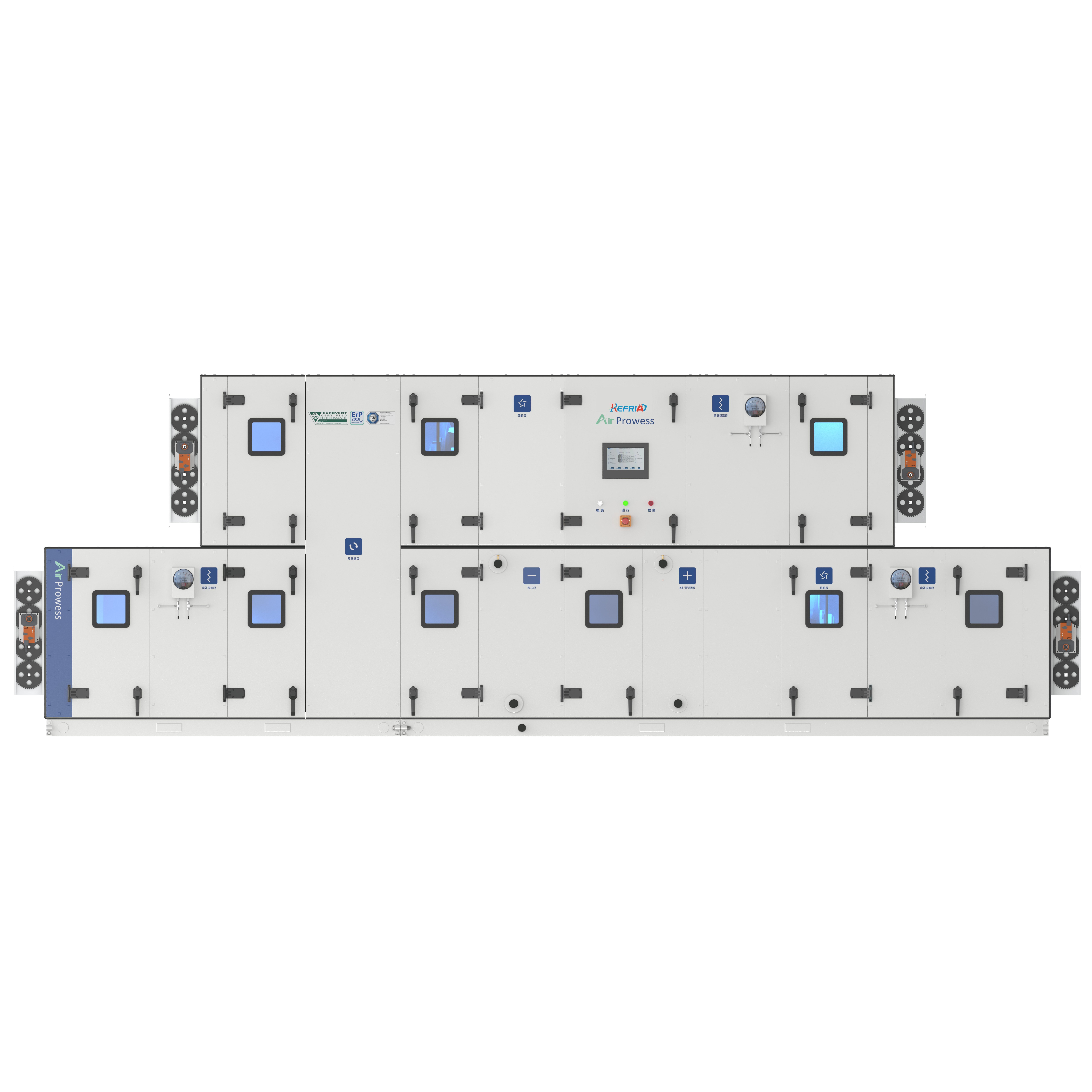
Refria Air Handling Unit
What Does HVAC Mean? Everything You Need to Know About Modern Climate Control
What Is an Air Handling Unit (AHU)? Complete Guide